Vehicle Safety - Thought Leadership
This month, we asked Stuart Lovatt, Director and Chair of Tyresafe, for his insights.
How much of an issue is winter preparedness for employers and organisations in the occupational driving sphere?
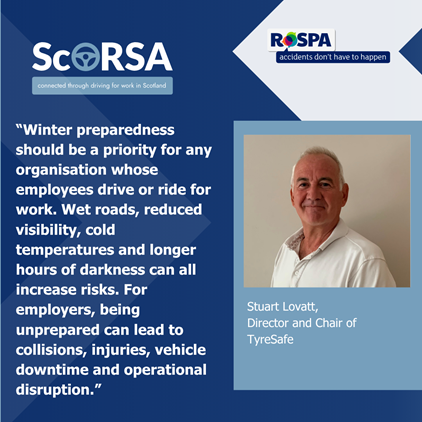
Winter preparedness should be a priority for any organisation whose employees drive or ride for work. Wet roads, reduced visibility, cold temperatures and longer hours of darkness can all increase risks. For employers, being unprepared can lead to collisions, injuries, vehicle downtime and operational disruption. Tyres are particularly important, as they are the vehicle’s only contact with the road and play a vital role in grip, steering and braking. Winter readiness shouldn’t be a last-minute response to a weather warning; it needs to be built into everyday fleet management, with regular vehicle checks, clear procedures and effective journey planning.
What are the biggest risks linked to winter driving for people who are occupational drivers?
One of the biggest risks is underestimating how much winter conditions affect vehicle control and stopping distances. Wet, icy and cold roads can make braking and steering more challenging, particularly when tyres are worn, damaged or incorrectly inflated. Occupational drivers or riders may also face pressure to meet deadlines, take unfamiliar routes or continue journeys when conditions deteriorate. This can make it harder to prioritise safety over schedules. Regular tyre checks are essential, alongside adapting speed, leaving greater following distances and planning journeys carefully. Road users and employers must recognise that being experienced or confident behind the wheel doesn’t remove the risks.
How can organisations move from reacting to winter driving incidents to proactively building weather resilience across their fleet operations?
Organisations can build weather resilience by making prevention part of everyday fleet management, rather than reacting when something goes wrong. This starts with routine vehicle checks, including tyre pressure, tread depth and visible damage, alongside clear processes for reporting and resolving defects. Employers should encourage employees to check forecasts, plan routes, allow extra time and delay journeys when conditions are unsafe. They should also ensure drivers and riders feel supported in putting safety before deadlines. Reviewing incidents and near-misses can help identify improvements and prevent repeat problems. Ultimately, regular checks, effective planning and a strong safety culture can help protect drivers and other road users.