Fatigue - ScORSA Membership Insight
This month, we asked Graeme Orr, Road Safety Consultant, for his insights.
.png)
How significant is fatigue as a workplace health and safety issue today?
Fatigue is very significant in the workplace; a lot of employees work different shifts this alone can be detrimental to their health as it can be very hard to adjust especially at the beginning if the employee has never been in a shift environment. A lot of employees operate machinery which is hard at the best of times never mind while fatigued. Many sleep conditions go undiagnosed such as sleep apnoea / hypersomnia issues again this can be very significant in a work place environment. Employees sometimes often don't speak up when they are fatigued due to the fear of potentially being ridiculed as there is a major taboo around fatigue and the impact it can cause in within a work place environment.
How can fatigue affect people's wellbeing, performance and decision-making at work?
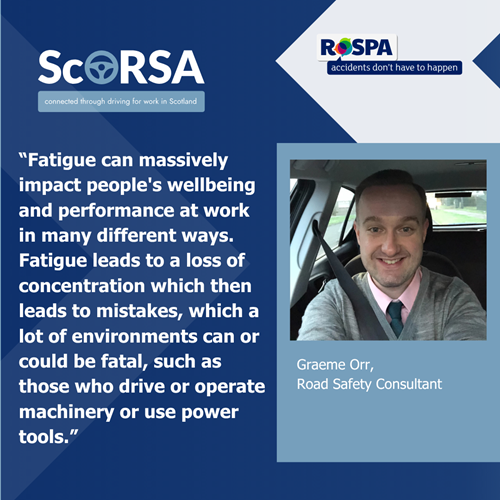
Fatigue can massively impact people's wellbeing and performance at work in many different ways. Fatigue leads to a loss of concentration which then leads to mistakes which a lot of environments can or could be fatal such as those who drive or operate machinery or use power tools. If employees are tired it leads to wellbeing issues as it can create irritability and things being rushed/ decisions being made in a rash manner rather than a logically manner. Travel time to and from a place of work on top of ( potentially) an 8-hour shift in a physical environment for example can lead to stress as the employee will be physically fatigued as well as mentally exhausted and again this can create rash decision making which can jeopardise the employee's safety on the way to and from a place of work as well as work as previously mentioned. A tired workforce can lead to very low morale which in turn creates wellbeing issues.
What can employers do to reduce fatigue-related risks and keep people safe?
Employers can reduce fatigue related issues to help keep people safe by implementing strict measures around breaks ( especially when driving or machinery is involved). Where employees have to drive to sites for set times and then do an 8-hour shift and drive home again this can when driving to and from a site in some cases become a 10-12 hour day the driving time could be included in the employee's day, this would mean " less" work being done in terms of hours but the quality of work would probably be higher due to the lack of fatigue created by excess travel. Employee safety should be paramount and many employers forget that a high percentage of road crashes occur when people are either on their way to work or coming home from work. Making sure an employee is fit to work and not fatigued is majorly important employees who have medical conditions are they given at times lighter duties? Are employers aware of any medication that staff may be taking again as a lot of medication causes fatigue. Keeping people safe should never be compromised and not just in the work place thinking of how much travel people do or how much down time is given between shifts, following rules doesn't mean that it's " safe " creating an environment where workers are refreshed and employers are respecting the issues around fatigue will result in a far more productive workforce.
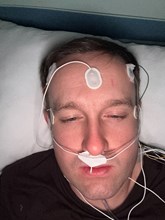
Graeme’s experience of fatigue led to him being hospitalised for sleep apnoea and idiopathic hypersomnia, highlighting the risks of pushing through extreme tiredness at work.
Should you be interested in speaking to Graeme about his experience, please contact him on driveorrtraining@outlook.com